


How To Clean Your Swimming Pool Like A Professional


Maintaining a clean and healthy swimming pool is essential — not only for appearance, but also for safety and long-term system performance. However, many pool owners struggle with improper cleaning methods, which often lead to cloudy water, dirt accumulation, and unnecessary wear on equipment.
For big pools, one of the most effective ways to keep your pool in optimal condition is by using a vacuum pump with trolley correctly, for small pools, owners can use the skimmer box suction point or a dedicated vacuum point. When done properly, this process ensures efficient dirt removal while keeping your pool system running with low maintainence effort and high reliability.
In this guide, we will walk you through the proper step-by-step method on how to use a pool vacuum pump like a professional.
Step 1: Proper Preparation of Equipment
Before starting the vacuum process, it is important to ensure that all equipment is correctly prepared and in good condition. This includes:
- Vacuum head
- Telescopic pole
- Flexible vacuum hose
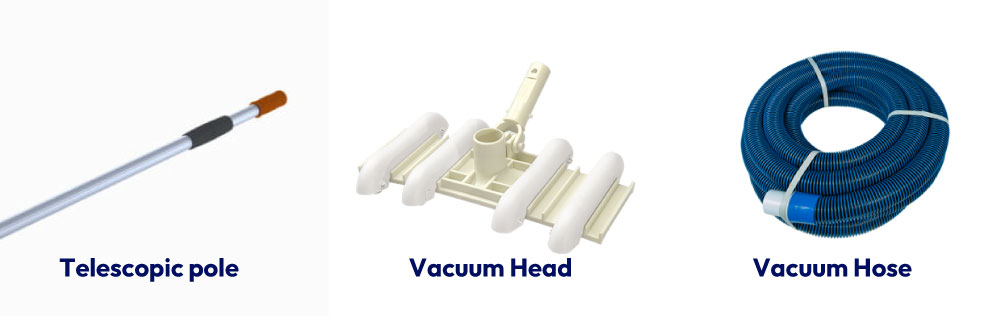
Each component must be securely connected to avoid air leakage, which can significantly reduce suction efficiency. Proper preparation is the foundation of effective cleaning and ensures smoother operation throughout the process.
Step 2: Correct Connection to the Filtration System
The vacuum hose should be connected to the pool’s suction point, typically through the skimmer box, a dedicated vacuum port or the swimming pool pump on the trolley.
At this stage, it is critical to remove all air from the hose by submerging it fully in the water before connecting. Air trapped inside the hose can disrupt suction power and reduce cleaning performance.
A properly connected system enhances overall reliability, allowing the pump to function at its optimal capacity.
Check out our video below where we show you step by step basis how to properly vaccum and clean your pool, and what are the pitfalls to look out for:
Step 3: Controlled and Systematic Vacuuming
Once the system is running, begin vacuuming the pool floor slowly and systematically. Avoid rushing the process, as fast movements will disturb dirt and debris, causing it to float back into the water instead of being removed.
A steady and controlled technique ensures:
- Maximum dirt extraction
- Better water clarity
- Reduced strain on the filtration system
This approach contributes to a more low maintainence routine, as it minimizes the need for repeated cleaning.
Step 4: Focus on High-Debris Areas
Certain areas of the pool tend to accumulate more dirt, such as corners, steps, and zones with limited water circulation. These areas should be given extra attention during vacuuming.
By targeting these sections carefully, you prevent long-term buildup that can lead to algae growth or water imbalance.
Step 5: Post-Cleaning System Maintenance
After completing the vacuum process:
- Turn off the pump system
- Remove and rinse the vacuum equipment
- Perform backwashing or clean the filter if necessary
This final step is often overlooked, but it is essential to maintaining the reliability and lifespan of your pool system. A clean system performs more efficiently and reduces the risk of future issues.
